
Hummingbird Feeder Parts You Need to Know
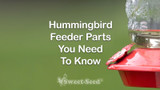
How well do you know your hummingbird feeder? It may seem like a strange question, but being familiar with hummingbird feeder parts and construction can help you keep the feeder in top condition so it is always safe and fully functional for every hungry hummer.
Types of Hummingbird Feeders
There are two basic hummingbird feeder styles, gravity-fed feeders and saucer or dish feeders. Understanding the differences between them can help you better identify the parts on your specific feeders and know how to keep them at their very best.
Gravity-fed feeders have the nectar reservoir above the base with the feeding ports. A vacuum develops in the feeder after it is filled and flipped upright, and air pressure keeps the feeder from spilling excessively. These feeders look more bottle-like and might have a pinched waist, wine bottle, mason jar, faceted, or globe appearance.
Saucer feeder styles are simple dishes that have a closed lid, with holes in that lid for hummingbirds to access the nectar. While basic dish designs are most common, saucer feeders might also be bars, blown glass bubbles, honeycomb-style tops, or even wearable rings for hand-feeding hummingbirds.
Anatomy of a Hummingbird Feeder
Both types of feeders have similar parts, and understanding those parts is necessary to use the feeder to its best effect. All hummingbird feeders, no matter their size or style, have four basic parts:
- Reservoir – Also called the tank, this is where the feeder’s nectar is stored. The capacity can vary, and the tank can be removed or opened for easy cleaning and refilling.
- Base – This attaches to the reservoir and is where the feeding ports are located. Bases may screw or snap on to the reservoir but should be secure to minimize the risk of leaks.
- Feeding Ports – These small holes offer hummingbirds access to reach the nectar. Feeding ports are often decorated with red, white, or yellow flowers to attract more attention.
- Hook – All hummingbird feeders have some sort of hanging hook or wire. While an accessory hook may be necessary to actually hang the feeder for use, some built-in hanger is a critical part.
Many hummingbird feeder designs have three additional parts. While these are optional (and often removable if you don’t want to use them), they can be great additions to keep the nectar safe and make the feeder easier for birds to use.
- Perches – While hummingbirds are adept fliers and do not need a perch to feed, perches can offer a spot to rest and give great views of hummingbirds as they visit the feeder.
- Bee Guards – These mesh-like covers are positioned over the feeding ports to keep bees from mobbing the nectar. Saucer feeders don’t often have bee guards because bees can’t reach down into the reservoir.
- Ant Moat – A water-filled cup or bowl either above or below a nectar feeder can keep ants from swarming to the feeding ports. If the feeder is hung, the moat will be on the hook or wire above, but if the feeder is mounted on a pole, the moat will be below the feeder to block the ants’ access.
Learning Your Hummingbird Feeder Parts
Once you’ve chosen a hummingbird feeder, take a few minutes to familiarize yourself with all its parts. Examine any packaging and tags for details on capacity and care, such as whether the feeder may be dishwasher safe. Carefully take the feeder apart, noting how different parts fit together and how the connections between them feel. Pay particular attention to any small nooks or crevices where nectar might seep and crystallize, which could cause clogs or breakages. Reassemble the feeder gently, but do not overtighten connections or the feeder may warp or break.
The better you know your hummingbird feeder, the easier it will be to maintain it in good condition and keep it clean and safe for hummingbirds to use.