
Hummingbird Incubation Periods
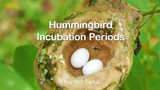
Incubation is the most delicate part of the hummingbird nesting season, and the incubation periods for these tiny birds vary in different species. By understanding what incubation is, birders can easily support nesting hummingbirds to keep their eggs in ideal conditions for healthy hatchlings.
What Is Incubation?
Incubation is the time between when eggs are laid in a nest and the baby birds hatch. During this period, the mother hummingbird sits on the eggs to protect them and control the temperature as the embryos mature. She does this entirely on her own, as male hummingbirds do not participate in incubation or raising chicks after they hatch.
Proper egg temperature is essential for healthy development. The mother hummingbird may occasionally stand above the eggs, rotate them, shade or fan them with her wings, or otherwise take steps to ensure they are the correct temperature. She can feel the temperature through her skin, or may even quickly lick the eggs to test the temperature with her tongue.
Of course, the mother hummingbird does need to leave the nest periodically to feed. She does this as briefly as possible, or will even enter a state of torpor to preserve her own energy while incubating her eggs so she doesn’t have to feed quite as often.
Typical Incubation Periods for Hummingbirds
Most hummingbirds incubate their eggs for 12-22 days, depending on the species and the overall environmental conditions when the eggs are laid. The most common breeding hummingbirds in the United States have incubation periods as follows:
- Ruby-Throated Hummingbird – 12-14 days
- Rufous Hummingbird – 15-17 days
- Black-Chinned Hummingbird – 11-16 days
- Allen’s Hummingbird – 17-22 days
- Anna’s Hummingbird – 15-17 days
- Calliope Hummingbird – 15-16 days
- Broad-Tailed Hummingbird – 12-16 days
- Costa’s Hummingbird – 15-18 days
The exact timing of individual hummingbird incubation periods will vary from year-to-year and even brood-to-brood if more than one brood is laid in a single summer. During hotter years or later in the summer when temperatures are higher, for example, incubation periods might be somewhat shorter, while in cooler years or in more northerly locations, the same hummingbird species might have a slightly longer incubation. Humidity, the number of eggs in the brood, and how many times the mother hummingbird must leave the nest are all other factors that can influence incubation times.
Hazards During Incubation (And How to Help Out!)
It is no surprise that the incubation period is particularly hazardous for hummingbirds. Predators might raid the nest for a snack, the eggs can overheat easily, heavy rain might flood the nest or cool the eggs too much to hatch, or a stressed mother hummingbird might be pressured to abandon her eggs.
There are easy ways to support hummingbirds during the incubation period. Providing clean, full feeders can make it easy for a mother hummingbird to find enough food without leaving the nest for long periods, while a mister or small fountain nearby can provide a source of water for a quick bath. Deterring predators with baffles and other barriers, as well as keeping pets and children a safe distance from the nest, can help lower stress on the mother hummingbird and be sure she can incubate her eggs properly. A simple cover installed over a nest (far enough above so as not to be stressful or obstructive) can help provide shade and protect the nest from heavy rain.
The incubation period is a delicate time for all birds, and tiny hummingbirds can be even more susceptible to hazards and challenges. By understanding the importance of incubation and how long it lasts, you can better support mother hummingbirds to nurture their eggs peacefully and safely.