
Hummingbirds That Aren’t Called Hummingbirds
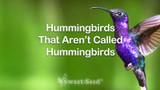
In the United States, we enjoy regular visits from a variety of hummingbird species: ruby-throated in the east, black-chinned and broad-tailed in the west, rufous wandering on different routes on both sides, and others like the Anna’s, Costa’s, broad-billed, and more. Despite their different ranges and appearances, however, they all have one thing in common – they are all called hummingbirds. But not all hummingbirds are!
Non-Hummingbird Hummingbirds
There are only three hummingbird species that are regularly seen in limited parts of the US that don’t have hummingbird as part of their name. The green violetear, plain-capped starthroat, and green-breasted mango are all tropical species that make rare appearances in Arizona and Texas, giving us a glimpse of hummingbirds that aren’t called hummingbirds. But there are actually far more species that do not have “hummingbird” as part of their common names, including:
- Hermits – Bronzy, Little, Reddish, Mexican, Hook-Billed
- Sicklebills – Buff-Tailed, White-Tipped
- Sabrewings – Violet, Lazuline, Santa Marta, Wedge-Tailed
- Jacobins – Black, White-Necked
- Coquettes – Tufted, Frilled, Spangled, Festive, White-Crested
- Brilliants – Empress, Pink-Throated, Green-Crowned
- Woodnymphs – Crowned, Fork-Tailed, Violet-Capped
- Sunangels – Merida, Royal, Tourmaline, Gorgeted
- Pufflegs – Glowing, Hoary, Coppery-Naped
- Sunbeams – White-Tufted, Black-Hooded, Shining
- Sylphs – Venezuelan, Long-Tailed, Violet-Tailed
- Woodstars – Chilean, Slender-Tailed, Purple-Collared
These are just a few of the hummingbirds who aren’t actually named hummingbirds. Even more are named for jewels – sapphires, rubies, topazes, emeralds – and other fun names such as thorntails, streamertails, trainbearers, visorbearers, helmetcrests, fairies, and mountain-gems. With more than 370 recognized species of hummingbirds, there is plenty of room for creativity when naming these charming birds.
What’s In a (Hummingbird’s) Name?
Beyond just creativity, a hummingbird’s name can be very descriptive about the species, even if the word “hummingbird” isn’t included. The bird’s color, tail size, geographic range, and distinctive features might all be part of the name. A thornbill, for example, has a shorter but still needle-like bill characteristic of hummingbirds but reminiscent of a plant thorn, while a piedtail would generally have two distinct colors in the tail or a firecrown has bold colors on the top of the head.
By recognizing the different names that all refer to hummingbirds, we can start to learn more about the amazing diversity of this beautiful bird family.
What All Hummingbirds Have in Common
Even though all hummingbirds may not actually have the same word in their name, they do share the same bird family – Trochilidae. Every hummingbird, no matter what it is called, belongs to that scientific classification.
All hummers also share the characteristic traits we love that make them instantly recognizable. This includes the needle-like bill, the sweet tooth for floral nectar, the hovering and acrobatic flight, the metallic sheen to at least some of their feathers, and their overall tiny size.
Regardless of what they are named, these flying jewels are indeed charmers and continue to fascinate any birders privileged to see them.