
Keep Other Birds Off Your Hummingbird Feeders
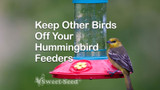
A surprising number of larger birds are just as interested in nectar as hummingbirds, but unfortunately, their much bigger appetites can quickly drain a feeder and leave less than drops for hungry hummers. How can you keep other birds from stealing sips?
What Other Birds Will Visit Hummingbird Feeders?
When you first hang a hummingbird feeder, you’re hoping for the fluttering visits of these tiny flying jewels. You might be surprised, then, when much larger and heavier birds with heartier appetites start visiting the feeder. A wide variety of birds will sip at nectar, even if their typical diet is seeds, fruit, or insects. Goldfinches, chickadees, orioles, house finches, warblers, woodpeckers, and verdins will all readily sip from nectar feeders and can empty the feeder much faster than expected.
Even some much larger bird species, particularly opportunistic and curious species, may visit the feeder just to check it out, even if they don’t drink nectar regularly. When they perch on the feeder or peck at it, however, they can cause spills and leaks that waste nectar, and may even damage delicate feeding ports. Grackles, blue jays, northern mockingbirds, and tanagers may all investigate a nectar feeder.
Even if other birds don’t active drain or damage a hummingbird feeder, their much larger size and bold behavior can easily scare off hummingbirds and keep them from feeding easily.
4 Easy Ways to Keep Larger Birds Off Hummingbird Feeders
Fortunately, there are very easy ways to keep larger non-hummingbirds off nectar feeders and let hummingbirds feed in peace and safety. Using all four methods will have the best results, and your hummers will thank you!
- Keep Hummingbird Feeders Clean
A dirty hummingbird feeder is more likely to leak and have syrupy or crystallized sugar easily accessible to larger birds. Furthermore, those same leaks will also attract ants and other bugs, which in turn may attract larger birds looking for an easy meal on tasty insects. Wiping the feeder down frequently and cleaning it regularly will minimize any residue that might be tempting for larger birds. - Use Feeders Without Perches
Hummingbirds can easily and comfortably hover as they sip, and they do not need to use perches. While hummers will perch if they want to, not having perches won’t keep them from visiting a nectar feeder. Larger, less welcome birds, however, do need a perch and won’t be able to sneak sips from a hummingbird feeder without that convenient resting spot. If your feeder has perches, they can usually be easily removed. - Provide More Tempting Food
Most larger birds that might sip from a nectar feeder will prefer other foods such as seed, suet, nuts, or fruit. Putting those foods out in a dedicated feeding station will quickly draw larger birds away from less-tempting nectar feeders. The only exception is orioles, and you can use a dedicated oriole nectar feeder (larger for these bigger birds, and with larger feeding ports and perches) to keep them away from hummingbird feeders. - Move Hummingbird Feeders Further Away
Larger birds may be perching on hummingbird feeders as they wait for space at other feeders to open up. By moving nectar feeders further away to a different part of the yard, other birds are less likely to use them as incidental perches. Try putting hummingbird feeders in the middle of a flowerbed, on the edges of eaves, or under a broad, shady tree as a new spot hummers will like and larger birds will skip.
Even with all four steps, you may still have larger birds that occasionally visit hummingbird feeders. Keep nectar feeders clean, remove perches, provide alternative foods, and relocate feeders, and fewer and fewer large birds will visit. This will keep your hummingbird feeders in the best condition and your hummingbirds well-fed!