
Protecting Hummingbirds on Hot Days
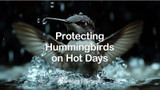
Tiny birds can get into big trouble on hot days. Hummingbirds already have naturally high metabolism and body temperature, but hot days can be just as unpleasant and stressful to the birds as they can be to the birders who love them. Fortunately, there are many easy ways to help hummingbirds keep cool even on the hottest days.
Hummingbird Temperatures
Hummingbirds are very energetic and have a high body temperature owing to their unique metabolic needs, particularly their fast-paced flight and blurry wing beats. On average, a hummingbird’s body temperature is roughly 106 degrees Fahrenheit, though it will fluctuate a few degrees throughout the day depending on activity level, nectar consumption, and ambient temperatures. Many hummingbirds thrive in desert habitats as well as tropical regions with high seasonal temperatures.
In general, a hummingbird’s naturally higher body temperature – higher than any other type of birds – means these birds aren’t bothered by higher air and climate temperatures, at least until those temperatures rise well over 100 degrees. Like many birds, hummingbirds adjust their own daily activities and are less energetic in midday when the temperatures are highest, though they do continue to feed regularly.
As a special note, hummingbirds are able to drop their body temperature and slow their metabolism on cold nights, a state called torpor. This helps conserve energy until these birds can warm up again the next day.
The Most Vulnerable Hummingbirds
Eggs and recently hatched hummingbird chicks are the most vulnerable of these tiny birds, and can be very susceptible to the dangers of high temperatures. Hummingbirds are altricial when they first hatch, meaning they are born nearly naked and with only very sparse, light down features. These features are too thin and delicate to provide adequate insulation for the young birds, and they can easily overheat and die when temperatures climb too high.
Female hummingbirds take many steps to protect their chicks from excessive heat. First, they typically build their nests in shady, protected spaces away from the most direct sunlight. Not only does this keep the nest cooler, but it also helps conceal it from predators. The materials of the nest, including a lot of fluffy plant down, have an insulating effect to keep the eggs within an acceptable temperature range.
As a female hummingbird incubates her eggs, she will adjust her position and let cool air in to reach the eggs several times throughout the day, testing the shell temperature with her tongue to ensure they are not too hot or too cold. She will also rotate the eggs to keep them evenly warm. Once the chicks hatch, she will continue using her body and wings to shade the youngsters during the first few days when they are unable to regulate their own body temperature effectively.
Keeping Hummingbirds Cool
There are many things that conscientious birders can do to help hummingbirds beat the heat. To keep hummers cool on the hottest days…
- Provide deep shade for nesting and perching, without pruning bushes that would let in more sunlight and heat.
- Hang hummingbird feeders in the shade, or at least in what will be a shady area during the hottest part of the day.
- Offer several feeders as well as nectar-rich flowers so hummingbirds don’t need to fly as far to find their next sip.
- Change nectar every 1-2 days during the hottest part of summer, or else it will ferment and could make the birds sick.
- Keep nectar feeders full and fresh so the birds have enough to drink, since they get all their fluid from nectar and do not drink from bird baths.
- Offer a mister, dripper, or bubbler-style fountain so hummingbirds have a place to bathe and keep cool as they wish.
- Consider adding a tarp, umbrella, or other shade cover over a nesting site or feeder if it can be secured safely and will not interfere with the birds or block cooling breezes.
The more of these steps you are able to take, the cooler hummingbirds will be overall and the more they will visit your friendly, welcoming yard no matter how high the temperatures rise.