
Unique Facts About Hummingbird Anatomy
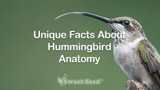
There is no denying that hummingbirds are physically unique, but their distinctive anatomy goes far beyond just their tiny size. If you understand hummingbirds’ unique physicality, you can better meet their needs and create a sanctuary in your yard these tiny birds won’t be able to resist.
Hummingbird Anatomy Is Just Different!
Anything unique and distinct is always intriguing, and there are many reasons hummingbirds are some of the most intriguing birds of all.
Tongue Structure – A hummingbird’s tongue has a fringed, zipper-like end that acts like a pump to draw nectar up for drinking, rather than licking or sucking.
Always be sure nectar is the proper concentration so hummingbirds can drink it easily. Nectar that is too thick or too thin doesn’t work as well with their unique tongue anatomy!
Wing Movement – Hummingbirds move their wings in a figure-eight pattern. This gives them the great aerial agility to hover and fly backwards.
Provide plenty of room around a hummingbird feeder for the bird to zip in and out from any direction, which helps them evade predators and stay alert to intruders as they defend their feeding space.
Foot Size – These birds have such tiny feet, they cannot walk. Smaller feet weigh less and offer less air resistance in flight, but hummingbirds can still perch easily.
Provide ample perches for hummingbirds to rest or preen, but remember, they don’t have to have perches to feed! They will perch at feeders, but can also happily hover for every sip.
Feather Structure – The metallically iridescent feathers of a hummingbird’s throat aren’t actually red, pink, orange or purple. The bright color is a reflection of light off the feather structure, and the feathers are actually quite dull without that reflection.
Position hummingbird feeders in both sunny and shady spots to see those throat feathers in different light and admire just how many colors they can be at different times of day.
Feather Number – Hummingbird feathers are proportionally tiny, but these birds only have 1,000-1,500 feathers, the fewest of any bird species. This helps reduce weight for flight, and these tropical birds have no need for winter insulation.
Provide mist baths, bubblers, or weeping rock fountains for hummingbirds to bathe easily and keep their feathers in peak condition.
Pectoral Muscles – On average, 25-30 percent of a hummingbird’s overall weight is the bird’s pectoral (chest) muscles. These muscles are the primary muscles for flight, so it makes sense they would be so large for these phenomenal fliers.
Eliminate pesticide use in the yard so hummingbirds have plenty of insects to eat as a great source of protein for strong muscles.
Sense of Smell – Like many birds, hummingbirds have no sense of smell, and more aromatic flowers will not attract them. Instead, their keen eyes can see flashes of color from great distances, and bright blooms will attract their attention.
Skip the most aromatic flowers for your hummingbird garden but feel free to plant a rainbow, as hummingbirds will visit nectar-rich flowers in any color.
Digestive System – Hummingbirds can digest nectar in just 20 minutes from first sip to, well, the other end. Their digestion is so efficient, they convert 97% of the nectar to usable energy, which is essential for their high metabolism.
Keep feeders full of fresh, clean nectar so hummingbirds always have a ready food source, and plant nectar-rich flowers with different bloom seasons for a naturally refillable menu option.
Bill Length – The sword-billed hummingbird (Ensifera ensifera) has the longest bill of any bird in the world relative to its own body length. The bill can be as long as 4.75 inches, and fits into the longest flowers such as daturas and fuchsias.
Choose tube-shaped flowers that will offer the most nectar to hummingbirds in a way they can access easily. A wider variety of blooms will give birds more choices for their individual feeding preferences.
There is always more to learn, discover, and enjoy about hummingbirds, and the more we know, the more we can make our yards hummingbird-friendly.