
Why Is That Hummingbird Asleep on the Feeder?
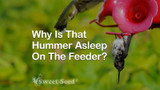
It can be charming to see a hummingbird appear to be snuggled down and napping on a nectar feeder, but what is going on, really? Is the bird in distress or truly just taking a break from its frenzied feeding? Why IS that hummingbird asleep on the feeder?
Hummingbirds Perching on Feeders
Hummingbirds will regularly perch on feeders not only as a convenient spot for a sweet sip, but also as a prime location to guard an ideal nectar source. These birds can be notoriously territorial and aggressive, often chasing other birds – even birds much larger than themselves – away to protect “their” feeder. All that resource guarding can consume a lot of energy, and while most birds will seek more hidden, protected spots for a quick nap, it is not unheard of for hummingbirds to simply catch a few winks right on the feeder itself.
While this isn’t extremely common behavior, seeing a hummingbird asleep on a feeder – complete with closed eyes, fluffed feathers, and bill pointed slightly up to relieve neck strain – is not abnormal and does not indicate a problem, nor does the bird need help. A hummingbird might nap for just a few minutes between feedings, or could remain immobile and at rest for an hour or longer.
Torpor
On cold evenings, it can be somewhat more common to catch hummingbirds napping. To conserve energy, these birds will enter a state of reduced metabolism called torpor, when their heartrate, respiration, and body temperature are dramatically reduced. Depending on the exact circumstances, the bird’s metabolism may slow by as much as 95% during heavy periods of torpor.
But the Bird Is Upside Down!
Sometimes, a sleeping hummingbird may slip around its perch and be dangling upside down. This can be very startling to see! It isn’t dangerous, however, because the bird is not about to fall. When a hummingbird relaxes its feet, the natural position of its toes and talons is to clench closed – it takes no effort for the bird to “hold on” to a perch. When the perch is thin and smooth, like on a feeder, it can be easy for a napping bird to become slightly unbalanced and tip over, swinging around the perch and upside down.
Dangling upside down will not hurt the bird like it might a human, and it will be easy for the hummingbird to right itself once it becomes more alert after its impromptu nap. In fact, because hummingbirds can take flight so quickly, the bird might just release its grip and drop as it brings its wings into play to zip away in one smooth motion.
Protecting Sleeping Hummingbirds
While hummingbirds can nap on feeders quite safely, there are steps that can make their preferred perches even better refuges. Positioning nectar feeders in protected areas away from strong winds will ensure the feeder doesn’t blow around erratically, and will also minimize drips or spills that could attract less desirable guests, such as rats, raccoons, or even bears.
Using baffles on any feeder poles can help keep raiders for accessing the feeders and adjacent perches where hummingbirds may be resting. It is also important to use ant moats and bee guards on hummingbird feeders, because if the feeders become overwhelmed with insects, hummingbirds will not feel comfortable and will stay away.
Of course, it is important to be sure nectar feeders are always cleaned and refilled so hummingbirds can easily access a quick snack or a convenient meal whenever they need. Even if feeders are taken in at night to protect them from freezing or raiders (assuming there are no birds snuggled on the perches), putting the feeders back out first thing in the morning will provide an early energy source for hungry hummingbirds. Whether or not the birds nap on feeders, they will appreciate the easy treat that will give them plenty of energy between their sweet sleeps.